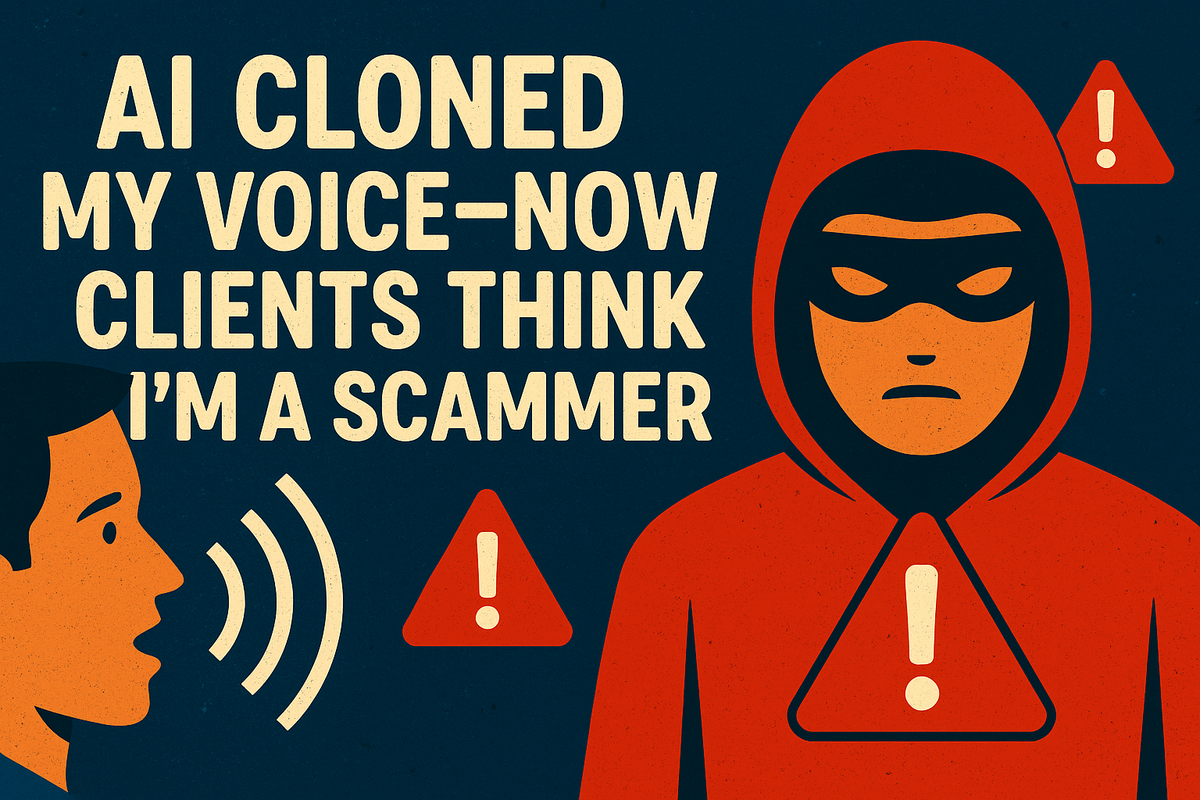
AI Cloned My Voice—Now Clients Think I’m a Scammer
AI can now mimic your voice with scary accuracy—and scammers are using it to trick clients. Here’s what service-based businesses need to watch out for before it’s too late.

You Sound Just Like You... But It’s Not You
Imagine your client getting a call from “you” asking for a payment, or telling them a meeting has moved. The voice? Identical. The words? Convincing. But it’s not you—it’s a scammer using AI-generated audio cloned from a voicemail or a podcast clip.
This isn’t a far-off risk. It’s happening right now, and service-based businesses are prime targets.
How Voice Cloning Works
Until recently, deepfake voice tech was expensive and hard to use. Now? Tools like ElevenLabs, PlayHT, and Resemble.ai make it shockingly simple to clone a voice in minutes—with just a short clip.
Some even offer free trials. Scammers don’t need Hollywood-level skills—they just need a few seconds of audio, scraped from your social media, sales call, or even a public webinar.
Real Scams. Real Losses.
Recent cases have shown voice clones being used to:
- Convince employees to send money or credentials
- Reschedule meetings with clients (so the scammer can take over)
- Call vendors to change banking details
- Sound like an attorney, realtor, or boss to manipulate trust
These scams hit hard because they sound trustworthy—literally.
5 Red Flags to Watch For
- Urgency: “I need this done right now.”
- Weird phrasing: Slightly off-sounding sentences or words you wouldn’t normally use.
- No follow-up email: A legit voice message is usually backed by text.
- Asking for unusual actions: Payment details, login credentials, or sensitive info.
- No video or FaceTime option: They avoid visual channels.
How to Protect Your Business from AI Voice Scams
- Create verification protocols: Require a second confirmation channel (like Slack, SMS, or email) for requests involving money or account access.
- Limit public voice recordings: Podcasts, YouTube, and webinars are gold mines for scammers.
- Educate your team: Everyone from reception to accounting should know these scams exist.
- Use AI detection tools: Some platforms can spot AI-generated voices with decent accuracy.
- Implement a “safe word” system: Not just for spy movies—use it internally for voice-only verifications.
Don’t Be the Next Case Study
AI scams don’t just hit big corporations. They’re especially dangerous for small service businesses that rely on client trust and personal communication. One fake call could cost you thousands—or your reputation.
Thanks for reading. If you're curious about how to protect your team from data mishandling while using AI, check out our post: “What Happens to My Data When I Use AI Tools?”. And if you need help training your team to use AI safely in your business, feel free to reach out to Managed Nerds.