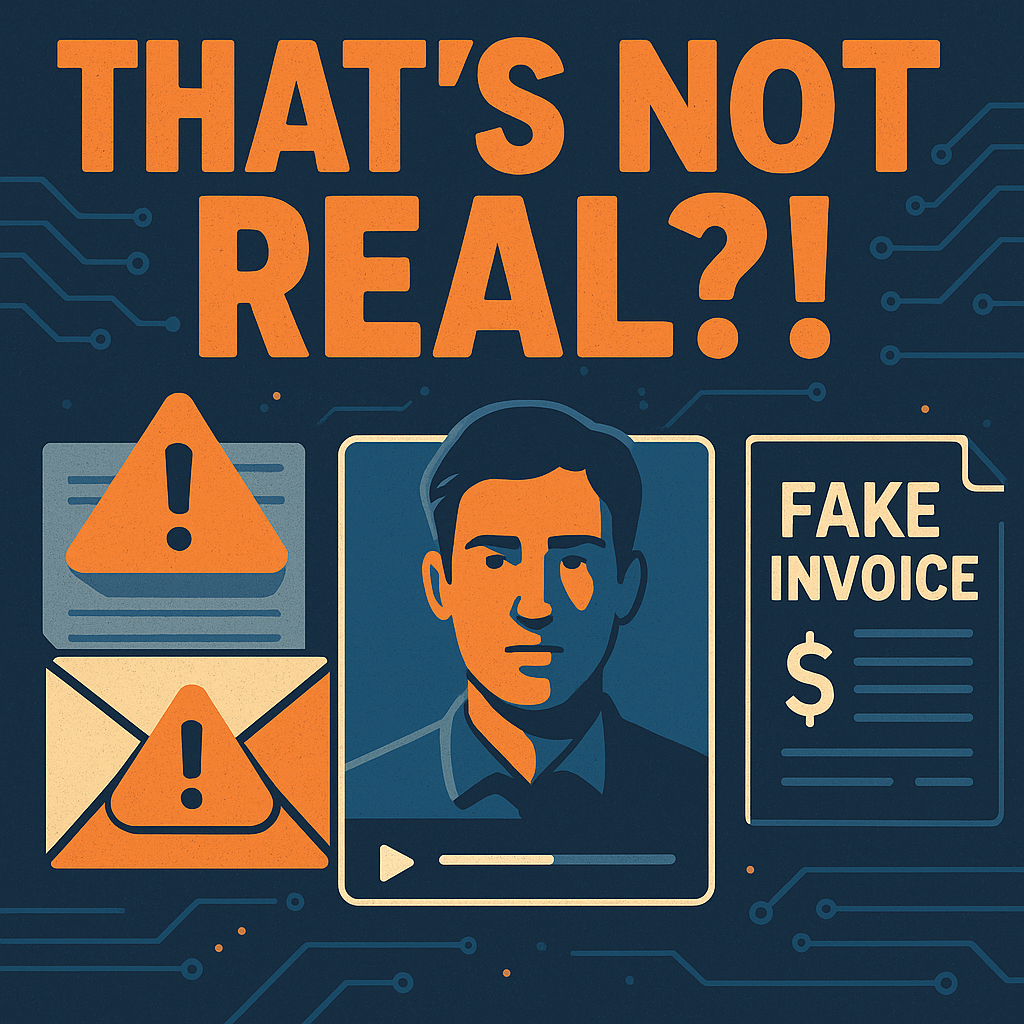
That’s Not Real?! How to Spot AI-Fake Emails, Videos, and Invoices
AI is making it easier for scammers to create convincing fakes—emails, invoices, even videos. Here’s how to spot them and protect your small business.

You Got Played by a Robot—and Didn’t Even Know It
A new invoice shows up in your inbox. It looks just like the ones you normally get. Same vendor. Same layout. Same logo.
You pay it.
And then you find out it was completely fake. AI-generated. Designed to fool you.
Welcome to the era of AI fakes—where deepfake videos, cloned voices, and fake emails are so good, your brain might not catch it. But don’t panic. This blog walks you through how to spot the signs and stay ahead of these digital illusions—without needing a tech degree.
What Exactly Are AI Fakes?
AI fakes also called synthetic media are convincing digital files—like videos, emails, voice messages, invoices, or websites—created or manipulated by artificial intelligence.
Scammers use tools like:
- Voice cloning: They can sound just like your boss
- Deepfake videos: Making it look like someone said something they didn’t
- AI-written emails and documents: Polished, persuasive, and dangerously believable
- Invoice lookalikes: Perfect copies of your real vendors’ formats
These fakes are used for scams like wire fraud, impersonation, social engineering, and phishing.
5 Warning Signs an AI Scam Is Headed Your Way
1. It’s Weirdly “Too Perfect”
Flawless grammar, polished visuals, and emotionless tone? That could be AI. Most people make small typos or write with quirks.
2. The Timing Feels Off
Did your “vendor” send a bill before a service even happened? Or did your “CEO” send an urgent request at 2am? Check the context.
3. You Can’t Verify the Sender
Hover over email addresses, double-check phone numbers, and use a second method to confirm unusual requests.
4. There’s a Fake Sense of Urgency
“Act now!” “Transfer this today!” If you feel pushed, pause. AI scams often simulate urgency to bypass logic.
5. The Media Has Subtle Glitches
In fake videos or calls, look for strange eye movements, lips not syncing, or robotic audio. They’re getting better, but not perfect—yet.
Pro Tips to Outsmart AI Scams
- Verify via second channel: Text or call the person directly. Never act on just an email or message.
- Train your team: Everyone should know these signs—not just leadership.
- Use multi-factor verification for payments and requests.
- Invest in scam filters and spam detection tools trained on AI-generated threats.
- Pause when pressured: AI scams rely on speed. You beat them by slowing down.
The Tools Are Scary—But You’re Smarter
Yes, AI fakes are rising. But you don’t need to be a tech expert to fight back. You just need awareness, a few smart checks, and a team that’s trained to pause, ask questions, and double-check.
Thanks for reading. If you're looking for more practical ways to protect your business from AI threats, see our other AI posts. If you need help training your team or setting up smart filters, feel free to reach out to Managed Nerds.