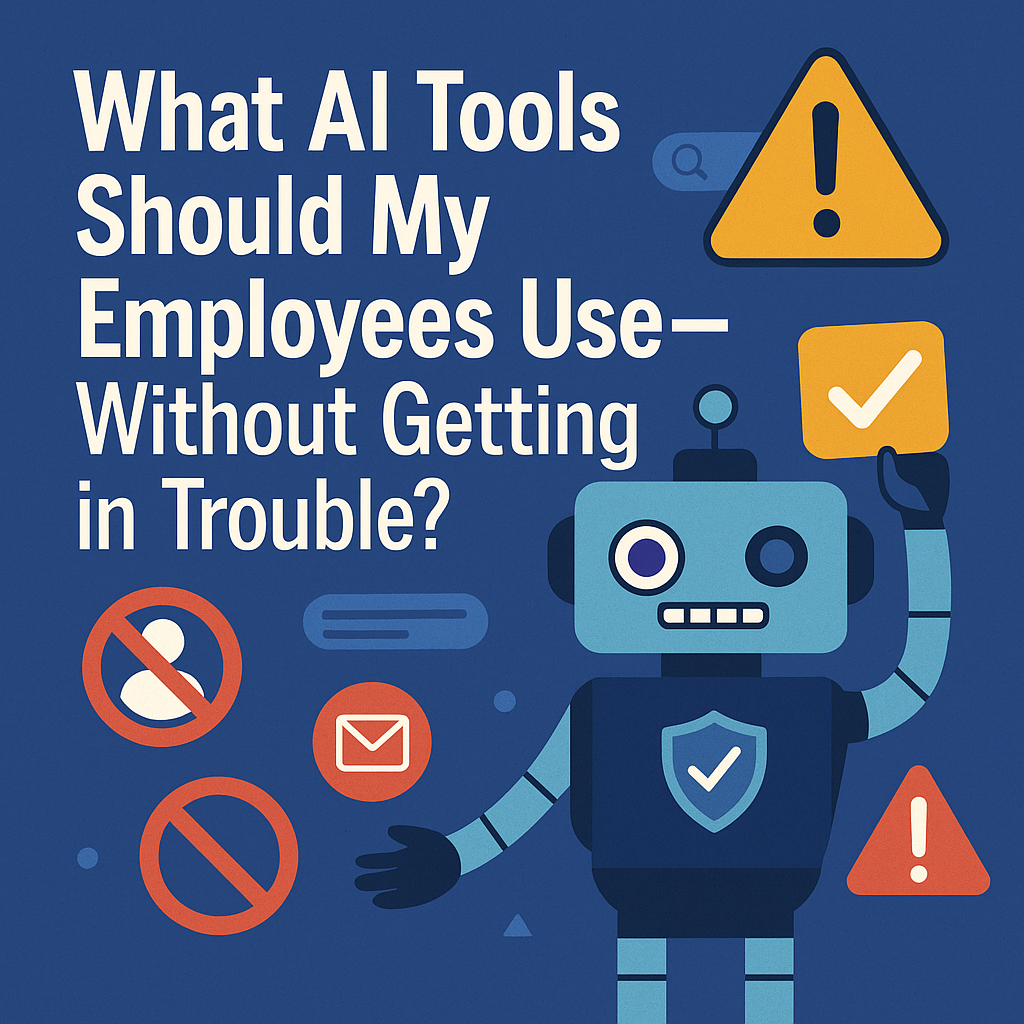
What AI Tools Should My Employees Use—Without Getting in Trouble?
The AI boom has hit the office, but not all tools are workplace-safe. Here’s how small businesses can empower employees without risking data leaks or chaos.

AI at Work: What Tools Are Safe for Your Team?
If your employees are already dabbling in ChatGPT, summarizing long emails with Perplexity, or tweaking client replies with an AI assistant… they’re not alone.
AI tools are popping up in daily workflows across industries—from real estate and legal services to trades and solo consultants. But just because they’re useful doesn’t mean they’re safe for work.
Let’s break down which AI tools your team should (and shouldn’t) use—and how to roll them out the right way.
The Problem: Shadow AI Use
Most employees don’t mean to break the rules. They’re just trying to save time. But when AI tools get used without company guidance, it can create major risks:
- Client data exposure
- Confidential messages fed into public models
- Inaccurate outputs that go unchecked
- Policy violations with no paper trail
In fact, Salesforce found that 61% of workers use generative AI without telling their boss. That’s a recipe for disaster if left unmanaged.
AI Tools That Are Safe for Small Business Use
Here are some vetted options that balance productivity with protection:
ChatGPT (with data controls on)
Use ChatGPT with clear settings and account controls. Make sure your team knows not to input client names, contracts, or personal info.
Perplexity.ai
This search-based assistant is excellent for research and summaries—and cites sources. Great for blog drafts, email outlines, and general questions.
GrammarlyGO
A helpful writing assistant that works within common tools like Gmail or Slack.
Microsoft Copilot
If your business uses Microsoft 365, Copilot stays inside your system and understands your documents and rules. A safer bet for internal use.
Custom-trained chatbots (like ChatGPT Teams)
You can create branded internal bots that understand your business tone and processes. This gives employees AI help without risking data leaks.
Tools You Might Want to Avoid or Restrict
⚠️ Free browser extensions that rewrite or summarize
These often send text to external servers with unclear privacy policies.
⚠️ “Resume builder” or “contract writer” tools with no citations
These tools may sound great—but they can hallucinate facts or plagiarize content.
⚠️ AI-generated image tools for client-facing material
You’ll want to check licensing, copyright use, and design brand consistency.
How to Create an AI-Use Policy Even If You're Small
You don’t need a 20-page manual. Just outline these 3 basics:
- What tools are approved for use
- What data must not be shared with AI
- Who to ask if there’s a question
Even a single-page PDF sent to your team can help keep things clear and reduce liability.
Train Employees to Think Critically
AI is a great assistant—not a replacement for human decision-making. Encourage your team to:
- Double-check AI content
- Use it to brainstorm, not automate everything
- Ask “Would I trust this if a person wrote it?”
Final Thoughts
AI can absolutely boost employee productivity—but only if you pick tools that align with your business goals and protect your clients. A little setup now avoids a lot of headaches later.
Thanks for reading! Want more insight on balancing AI productivity with security? Check out our other AI posts and if you're ready to create a smarter, safer AI plan for your team, feel free to reach out to Managed Nerds.