
SEO Isn’t Just Your Website: The 7 Places Your Business Info Must Match
If your phone, address, or name is different across the web, Google has to guess. And guessing rarely helps you rank. Here are the 7 places to clean up first.

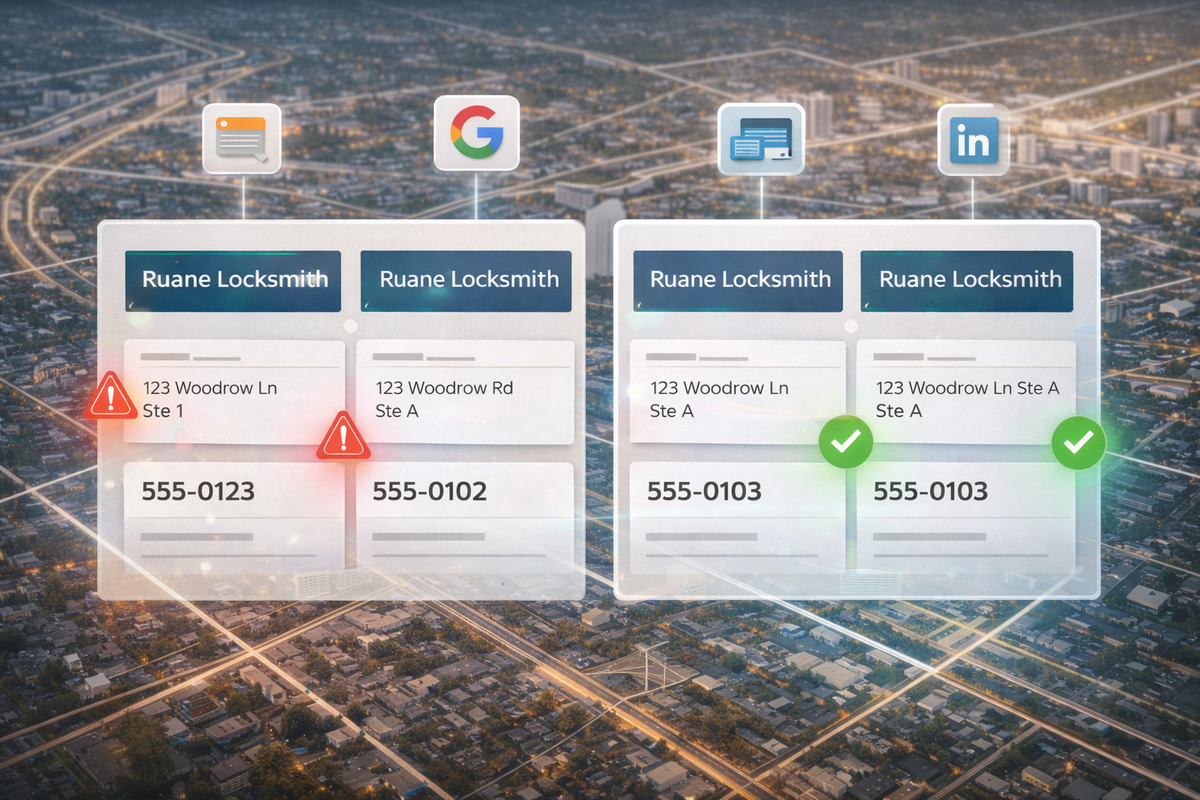
You can have a great website, a nice logo, a steady stream of reviews, and still watch your Google visibility wobble for one ridiculous reason.
Your business info doesn’t match.
Different phone number here. Slightly different name there. An old address buried in a directory you forgot existed. It feels harmless… until it isn’t.
Google’s own guidance on local ranking leans hard on providing complete, accurate business info and building trust across the web.
And when Google has conflicting information, you’re basically asking it to play detective with your business.
Spoiler: Google is not in a detective mood.
Cold open: Google doesn’t “know” you, it recognizes patterns
Here’s the mental model that saves a lot of headaches:
Google is constantly trying to answer: “Is this business real, and can I trust what I’m showing people?”
That trust comes from consistency across multiple sources. Google even notes that it pulls business information from across the web to serve results.
So if you want to rank, the goal is simple: make your “digital fingerprints” match everywhere that matters.
What “matching business info” actually means
Most people hear “NAP” and think it’s just Name, Address, Phone. It is, but in practice it’s also:
- Your website URL
- Your hours
- Your categories
- Your service area setup
- Your suite number formatting
- Your tracking numbers (when used wrong)
This is the kind of “boring” work that quietly decides whether you show up or fade out.
The 7 places your business info must match
No fluff, these are the spots that create the most ranking and lead problems when they’re inconsistent.
Your Google Business Profile
If your Business Profile is incomplete or inconsistent, you’re fighting with a hand tied behind your back. Google’s own local ranking tips point businesses back to accurate info and strong profiles.
Your website contact page
Your site is the anchor. If your Business Profile says one phone number and your site says another, you’ve created a credibility argument inside Google’s system.
Major data aggregators and big directories
Think of these as the “source code” that feeds other listings. If your old info lives here, it spreads.
Industry directories and local chambers
For trades, insurance agencies, realtors, inspectors, and service pros, these listings carry extra weight because they look “official” to both customers and search engines.
Social profiles
Facebook pages, LinkedIn company pages, Instagram bios. These often show up in branded searches, and mismatches confuse customers even if Google tolerates them.
Maps apps and navigation services
Apple Maps, Waze listings, car navigation databases. If your old address lives there, customers get routed wrong and blame you.
Duplicate listings
This is the sneakiest one. Duplicates dilute signals. You might have “one” profile, but Google sees two versions of you and doesn’t know which one to trust.
“But I don’t have an office, I’m a service business”
Then consistency matters even more.
Google has rules and policies around how businesses represent themselves, including service-area businesses.
If you serve customers at their location, the way you set up your service areas, address visibility, and categories should be clean and accurate.
This is where a lot of small businesses accidentally sabotage themselves, not by cheating, but by being messy.
The real-world cost of messy listings
This isn’t only about rankings. It’s about conversions and trust.
If someone calls the wrong number, gets a dead line, and then clicks the next provider, you didn’t “lose a lead.” You lost a customer who was already looking for you.
Or worse: they show up at your old location. Now you’re not just invisible, you’re “unreliable.”
A practical cleanup workflow that doesn’t take over your life
Here’s a realistic way to tackle it:
- Pick your official “canonical” business info (exact spelling, formatting, phone, URL).
- Fix Google Business Profile first.
- Fix your website next.
- Hit your top directories and social profiles.
- Search your business name + phone number and look for weird old results.
- Watch for duplicates.
A good rule: if it shows up in the first few pages of Google for your business name, it matters.
A quote worth remembering
“Confusion is the enemy of conversions.”
Matching business info feels like paperwork. But it’s actually reputation management, SEO stability, and customer trust all rolled into one.
Wrap-up
If you want your local SEO to stop swinging wildly, make your business details boringly consistent. Google rewards clarity.
If you want a pro to audit your citations, fix duplicates, and stabilize your local presence, Managed Nerds can handle the cleanup and build the ongoing system so it stays clean.