Another Linux Security Flaw Just Dropped — Here’s Why Small Businesses Should Pay Attention
A new Linux vulnerability is raising alarms after recent patches introduced more security concerns. Here’s what small businesses should know.

For many small business owners, Linux sounds like something only large tech companies use.
But behind the scenes, Linux powers a massive amount of modern business technology.
Cloud servers.
Web hosting.
Firewalls.
Network appliances.
Virtual machines.
Security systems.
Which is why security researchers are paying very close attention to a growing string of Linux kernel vulnerabilities discovered over the past two weeks.
And unfortunately, the latest patch may have introduced another serious issue.
What’s Going On?
Security researchers recently disclosed a new Linux local privilege escalation vulnerability called Fragnesia.
This follows two other major Linux kernel exploits:
- Copy Fail
- Dirty Frag
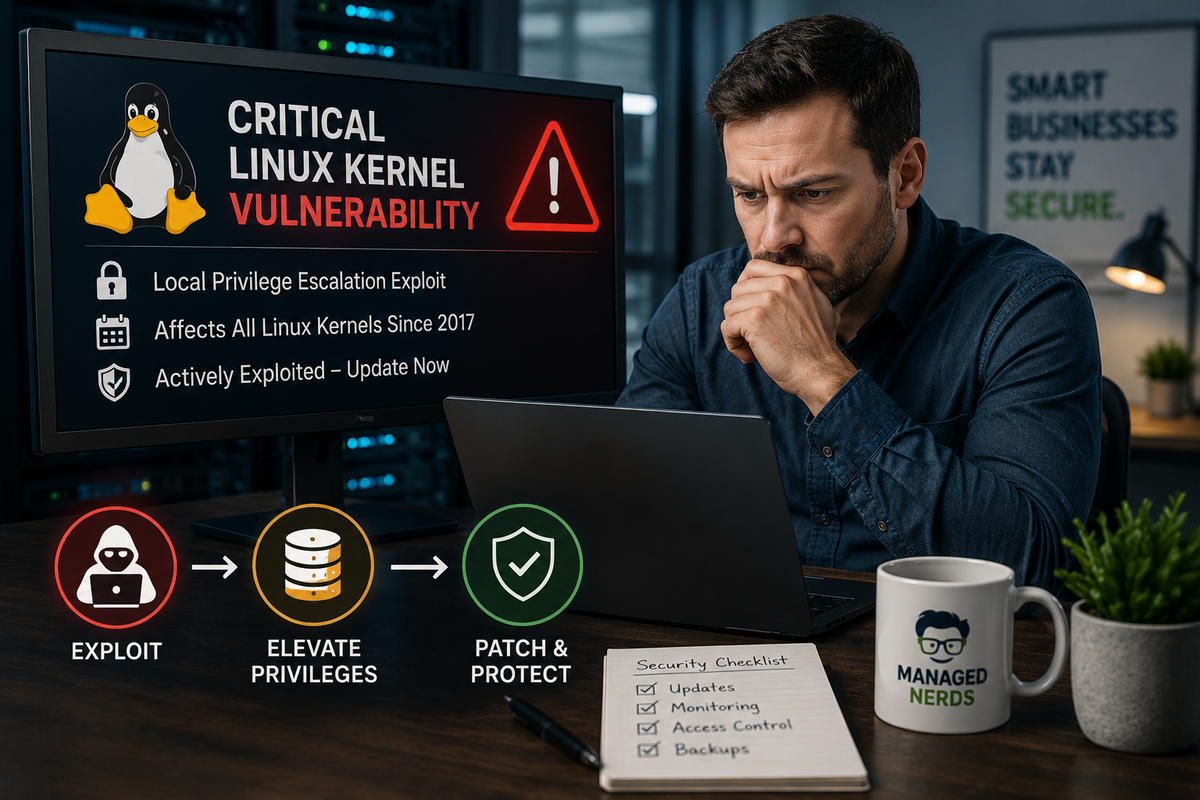
All three vulnerabilities affect the Linux kernel and allow attackers to potentially gain elevated or “root” privileges on vulnerable systems.
In simple terms:
If an attacker already has some level of access to a system, these flaws could potentially allow them to gain much deeper control.
That’s what makes privilege escalation vulnerabilities so dangerous.
The Bigger Problem: Fixes Introducing New Problems
What’s making security professionals especially frustrated is that the patch intended to fix Dirty Frag may have unintentionally activated the conditions for this newest exploit.
In other words:
- One vulnerability was patched
- Another related vulnerability appeared shortly after
That creates a difficult situation for defenders and IT teams trying to keep systems secure while vulnerabilities continue evolving.
Why Security Teams Are Concerned
Researchers and cybersecurity professionals are also debating how these exploits are being disclosed.
Some experts are criticizing the trend of publicly dropping exploit code online immediately, sometimes before defenders and Linux distributions have time to fully prepare patches and protections.
For businesses, that means:
- Attackers may gain access to exploit code quickly
- Organizations may not yet have complete protections available
- Security teams must react faster than ever
What These Vulnerabilities Actually Do
According to researchers, the vulnerabilities target memory handling within the Linux kernel.
Without getting overly technical, attackers may be able to:
- Modify system executable memory
- Inject malicious code
- Trick the system into running attacker-controlled processes
- Ultimately gain root-level access
Root access is essentially full administrative control over the system.
That’s why vulnerabilities like this are treated seriously.
Why Small Businesses Should Care
Even if your office computers don’t run Linux directly, there’s a good chance parts of your business infrastructure do.
Linux is commonly used in:
- Web servers
- Cloud environments
- NAS devices
- Firewalls
- VPN appliances
- Hosting platforms
- Security tools
Small businesses often rely on third-party providers and devices that quietly depend on Linux behind the scenes.
That means vulnerabilities like this can still affect:
- Website infrastructure
- Remote access systems
- File storage
- Business applications
- Network security devices
The Good News: There Are Mitigations
Researchers and vendors are already working on patches and recommendations.
Current guidance includes:
- Keeping Linux systems updated
- Restricting unnecessary local access
- Monitoring for abnormal behavior
- Hardening containerized environments
- Temporarily disabling certain networking features where appropriate
For some systems, protections like AppArmor may also reduce exploitability.
Why This Highlights the Importance of Proactive IT
One of the biggest challenges in cybersecurity today is speed.
New vulnerabilities appear constantly, and sometimes fixes create additional complications.
That’s why businesses increasingly rely on proactive monitoring and layered security approaches rather than assuming one patch solves everything.
How Managed Nerds Helps Businesses Stay Protected
This is where Managed Nerds helps small businesses reduce risk without needing an in-house security team.
Managed Nerds helps businesses by:
- Monitoring systems for unusual activity
- Keeping systems and devices updated
- Managing patches and security maintenance
- Helping secure remote access and business infrastructure
- Strengthening overall cybersecurity practices
- Providing guidance when major vulnerabilities emerge
The goal isn’t just reacting after problems happen.
It’s reducing exposure before vulnerabilities become incidents.
Final Thought
Stories like this are a reminder that cybersecurity is constantly evolving.
Even trusted systems and patches can introduce new risks, especially when vulnerabilities are being discovered and released rapidly.
For small businesses, the important thing isn’t becoming an expert in Linux kernel security.
It’s making sure someone is paying attention to the risks before they become costly problems.
Need Help Keeping Your Business Systems Secure?
If your business relies on cloud systems, remote access, servers, or connected infrastructure, Managed Nerds can help you stay ahead of emerging threats and security updates without the overwhelm.
Want More Simple Tech Tips Like This?
Subscribe for practical, easy-to-understand tech insights designed specifically for small business owners who want to stay secure and informed without drowning in technical jargon.