How Can Small Businesses Use AI to Revive Leads They Never Followed Up On?
Most small businesses are sitting on a list of people who asked for a quote and never heard back. Learn how to use AI to find them and restart the conversation.

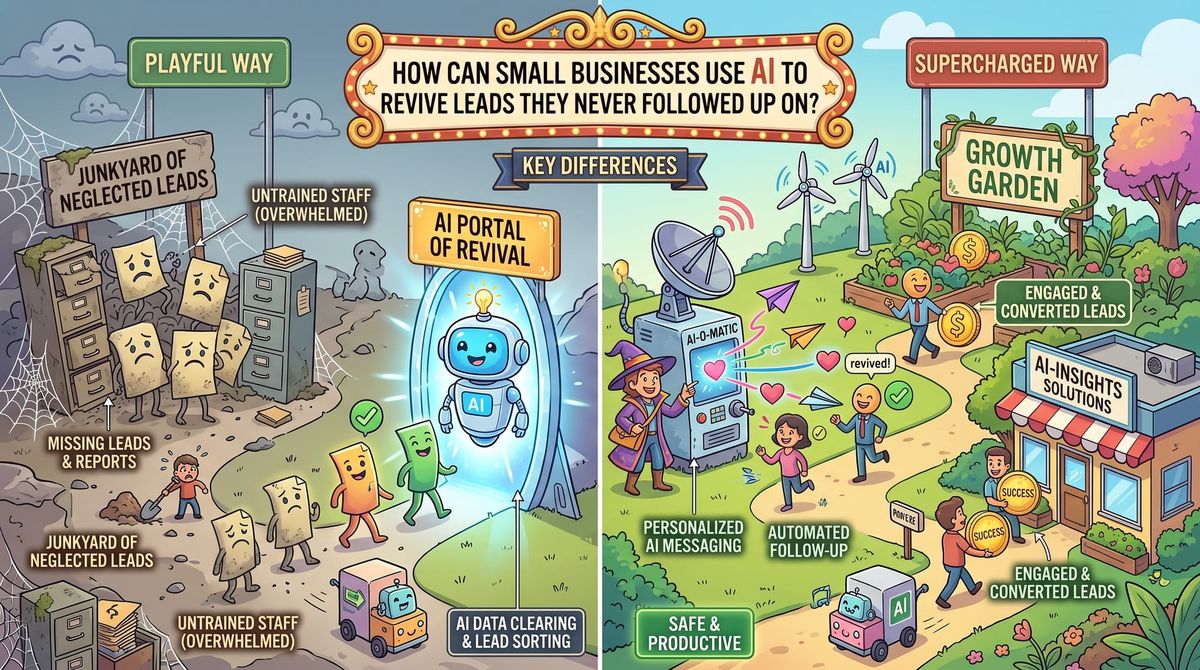
Somewhere in your email, your phone, and a notebook in your truck, there's a list of people who wanted to give you money.
They called. They filled out the form. They asked what it would cost. And then the job got busy, or you quoted and never followed up, or they said "let me think about it" and you both moved on.
That list is the cheapest lead source you have. You already paid to get those people — in ad spend, in time on the phone, in the quote you wrote at nine at night. Nobody has to be convinced you exist.
The reason it never gets worked is that it's tedious. Digging through months of email, remembering who wanted what, and writing outreach that isn't embarrassing takes hours nobody has. That's exactly the kind of tedium AI is good at removing.
Step 1: Build the list
You don't need a CRM to do this. You need to look in the three or four places your leads actually landed.
- Email. Search for the phrases your inquiries contain — "quote," "estimate," "pricing," "availability," your web form's subject line.
- Your phone. Missed calls and texts from numbers you don't recognize, especially ones you meant to call back.
- Your website forms. Wherever those notifications go.
- Social messages. The inbox nobody checks.
Pull the last twelve to eighteen months and paste the raw details into a spreadsheet: name, contact, date, what they asked about, what happened. Messy is fine.
Then hand that mess to AI:
Here's a list of past inquiries. Group them by what they asked for, flag anything where the conversation stopped without an answer from me, and sort them by how likely they are to still need the work. Tell me what information is missing.
The flagging is the useful part. There's a specific category of lead — the ones where you were the last person who owed a reply — that converts far better than the rest, and you almost certainly can't remember who they are.
Leave out anything sensitive. Names and what someone asked about are fine for most tools. Payment details, health information, and anything covered by a confidentiality agreement stay out. We've covered why AI assistants end up exposing more than you intended.
Step 2: Decide who's actually worth contacting
Not everyone on the list is. Some bought from someone else. Some were never serious. Some you're glad you didn't work with.
Ask AI to split the list into three groups: worth a personal message, worth a short general note, and not worth contacting. Then override it wherever your own judgment disagrees, because you know things about these people that a spreadsheet doesn't.
For most small businesses the first group is surprisingly small — maybe fifteen or twenty names. That's an afternoon of work, not a campaign.
Step 3: Write outreach that references the actual conversation
This is where it either works or reads like spam.
"Just checking in!" gets deleted. What gets answered is a message that proves you remember the specific thing they wanted.
Write a short, plain email to a past lead. They asked about [what they asked about] in [month]. The conversation ended without a response from me. Be direct, acknowledge the gap without over-apologizing, and give them one easy way to pick it back up. Under 100 words, no marketing language, sound like a person who runs a small business.
Then read it and fix it. AI tends toward slightly too polished and slightly too eager. Cut the enthusiasm, shorten it further, and make sure it sounds like you.
Three rules for these messages:
- Name the specific thing. "The kitchen refit you asked about in March" beats "your recent inquiry."
- Own the silence briefly. One line. "I dropped the ball on getting back to you" is enough — don't grovel.
- Make the next step tiny. A yes/no question outperforms an invitation to schedule a call.
Step 4: Send them like a person, not a blast
Send individually, spread over several days, from your normal email address. Not a bulk send, not a template with a merge field, not from a marketing platform.
This matters practically as well as ethically. A sudden mass email to a stale list is how you get filtered as spam — and these are people who contacted you once, some of them a year ago, which is not the same as an engaged mailing list.
If you're reaching out by text, be more careful still. Text messaging to old contacts has real consent rules attached to it, and a marketing text to someone who only ever called you for a quote is a different thing from replying to their original message.
Step 5: Keep the ones that answer
The point of this isn't a one-time sweep. It's finding out that you lose a measurable number of jobs to silence.
Once you've worked the backlog, fix the leak: one place where every inquiry lands, and a rule that nobody gets left without a reply. AI can draft the follow-ups going forward too — the difference is you'll be following up in three days instead of eight months.
Bottom line
You don't need more leads this quarter as badly as you need to finish the conversations you already started. Pull the list, let AI organize it and draft the outreach, then send fifteen messages that sound like a human who remembers them.
Some of those people bought from someone else. Some have been waiting for you to call.
Want one system where every call, form, and message actually lands — instead of four places you have to remember to check? Our small business tech support helps owners get the tools working together so leads stop falling through. Reach out and we'll take a look.