Vertical Video SEO: Why Reels, Shorts, and TikToks Need Search Intent Now
Vertical video can support SEO when it answers real customer questions. Here’s how small businesses can use Reels, Shorts, and TikToks with search intent.

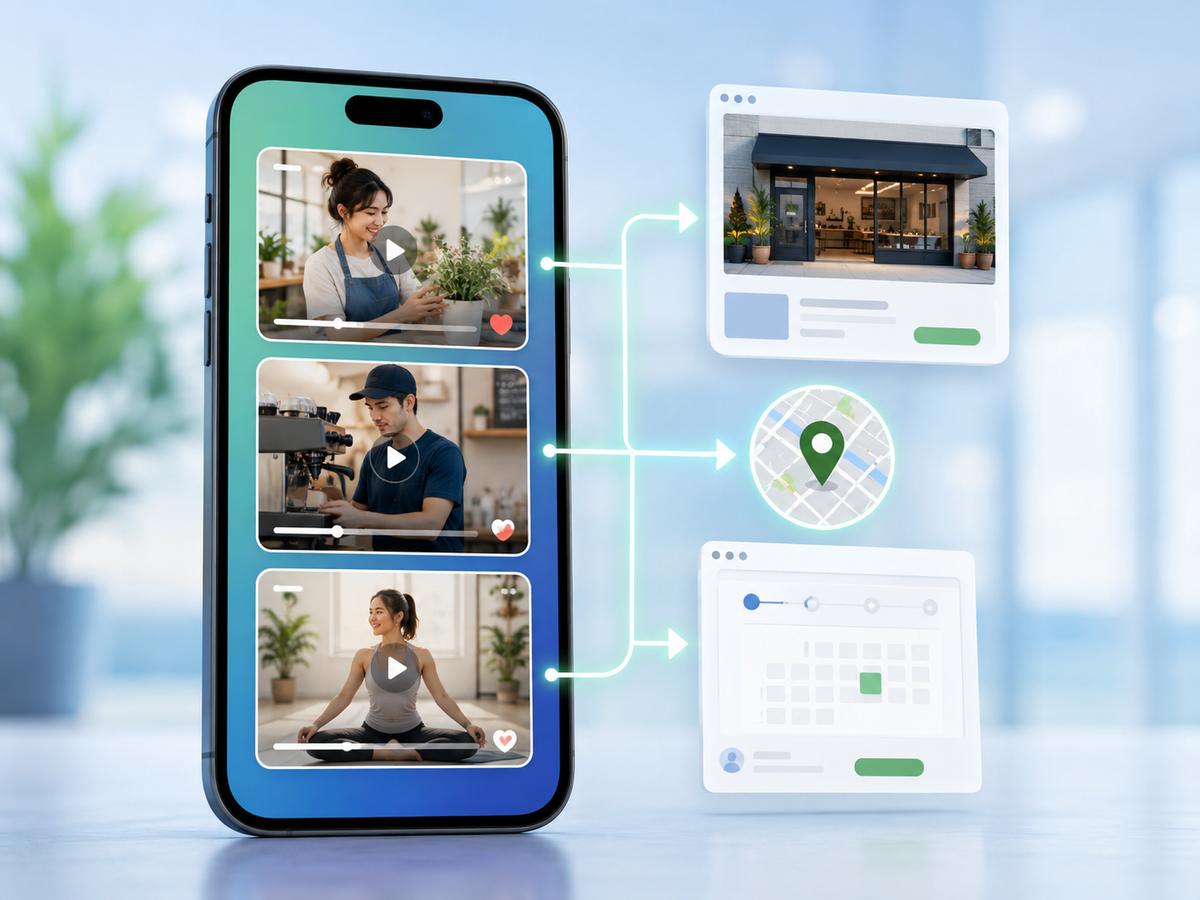
Vertical video is not just entertainment anymore.
It is how people discover businesses, compare options, learn quick answers, and decide who feels trustworthy.
That means Reels, Shorts, and TikToks should not be treated like random “fun posts.”
They should be treated like searchable content.
A recent The Verge piece described vertical video as the dominant format across many social and media platforms, driven by full-screen feeds, algorithmic discovery, and the way major platforms now push short-form video into the center of the user experience.
For small businesses, the lesson is simple:
If people are watching short videos to search, learn, and decide, your videos need search intent.
What is vertical video SEO?
Vertical video SEO means creating short-form videos that are easy for people and platforms to understand.
It is not just about hashtags.
It includes:
- the topic you choose
- the words you say out loud
- the caption
- the on-screen text
- the description
- the location context
- the hook
- the next step
The goal is to make your video show up for the kinds of questions your customers already ask.
Why small businesses should care
Your customers may not search in one place anymore.
They may:
- search Google
- check YouTube
- scroll TikTok
- search Instagram
- look at Google Business Profile
- ask AI tools
- check reviews
Short-form video can support all of that because it helps people see and hear your expertise quickly.
A 30-second video can answer a question faster than a long sales page.
And when it is tied back to a blog or service page, it becomes part of your SEO system.
The mistake most businesses make with short-form video
Most businesses start with the format before the intent.
They ask:
“What trend should we do?”
Better question:
“What question should we answer?”
A trend might get views.
A useful answer can get the right viewers.
For a small business, the goal is not just attention. The goal is relevant attention from people who might actually become customers.
The best vertical video topics for search
Start with questions that show buying intent or problem awareness.
1) “How much does it cost?”
Cost questions are powerful because they attract people who are actively evaluating a service.
Examples:
- “How much should a small business spend on SEO?”
- “How much do Google Ads cost for a local business?”
- “How much does a website audit cost?”
- “What affects the cost of digital marketing?”
You do not have to give one exact price. Explain the range, the factors, and what changes the cost.
2) “3 signs you need…”
These are great because they help viewers self-diagnose.
Examples:
- “3 signs your website is losing leads”
- “3 signs your Google Business Profile needs cleanup”
- “3 signs your ads are attracting junk leads”
- “3 signs your SEO content is too vague”
3) “Before you hire…”
This builds trust before the sales conversation.
Examples:
- “Before you hire an SEO company, ask this”
- “Before you run Google Ads, check this”
- “Before you redesign your website, fix this first”
- “Before you let AI answer your phone, ask this”
4) “Common mistakes”
Mistake videos work because they create quick clarity.
Examples:
- “Stop sending ad traffic to your homepage”
- “Do not use a 12-field lead form”
- “Do not post the same ad creative forever”
- “Do not let Performance Max eat your brand traffic”
5) “What happens next?”
These reduce uncertainty.
Examples:
- “What happens after you request an SEO audit?”
- “What happens after someone fills out your contact form?”
- “What happens after you download our checklist?”
- “What happens during an AI consulting call?”
Process clarity turns nervous viewers into warmer leads.
How to optimize short-form videos for search
1) Make the first 2 seconds obvious
Do not open with:
“Hey guys, just jumping on here…”
Open with the question.
Examples:
- “Why are your Google reviews not showing up?”
- “Here’s why your ads get clicks but no leads.”
- “Before you hire an SEO company, check this.”
- “Your contact form might be losing leads.”
People should know the topic immediately.
2) Say the keyword out loud
If the video is about small business SEO, say “small business SEO.”
If it is about Google Business Profile, say “Google Business Profile.”
If it is about lead magnets, say “lead magnet.”
Platforms can use audio, captions, and context to understand video content. Short-form systems also rely heavily on recommendation and content signals, not just follower count, which makes clarity even more important.
3) Use clear on-screen text
The on-screen text should be short.
Good:
“Leads but no bookings?”
Good:
“Google reviews missing?”
Good:
“SEO vs ads?”
Bad:
“A comprehensive framework for visibility optimization and lead attribution”
If someone cannot read it fast, simplify it.
4) Write a useful caption
Do not waste the caption.
Use it to explain what the video answers.
Example:
“If your Google Ads are getting clicks but no leads, check your landing page, form, offer, and tracking before increasing the budget.”
That caption gives context to viewers and platforms.
5) Add location when it matters
If you are local, mention your area naturally.
Examples:
- “For small businesses in Augusta and Evans…”
- “If you serve Columbia County customers…”
- “For local service businesses in the CSRA…”
This helps connect the video to your local SEO strategy.
6) Link back to a deeper resource
A short video should not carry the whole sale.
Use it as a doorway.
Send viewers to:
- a blog
- a service page
- a lead magnet
- a booking page
- a Google Business Profile
- a related YouTube video
The video creates attention. The page provides depth.
A simple video formula you can copy
Use this structure:
Hook
Ask the question or name the problem.
Answer
Give the short answer.
Explain
Give 2–3 quick points.
Proof or example
Show one example or quick scenario.
Next step
Tell them what to do next.
Example:
“Getting clicks but no leads? Your ad may not be the problem. Check your landing page first. If the page loads slowly, uses a vague headline, or has a long form, people may leave before contacting you. Start by making the offer clear and the form easier. Want the full checklist? Read the blog linked in our profile.”
That is simple and searchable.
How to turn one blog into 3 vertical videos
Let’s say your blog is:
“The Thank-You Page Most Small Businesses Waste.”
You can turn it into:
Video 1: Problem
“Your thank-you page should not just say ‘we’ll be in touch.’”
Video 2: Checklist
“3 things every thank-you page should include.”
Video 3: Tracking
“Why your thank-you page helps measure conversions.”
One blog. Three videos.
That is how you get more mileage from your content.
Where to post vertical videos
YouTube Shorts
Best for:
- search-friendly answers
- longer shelf life
- tying into full YouTube videos
- supporting blog content
Instagram Reels
Best for:
- trust building
- proof
- behind-the-scenes content
- local visibility
TikTok
Best for:
- discovery
- quick education
- simple explanations
- trend-aware content when relevant
You do not have to post everywhere forever.
Pick the platform your audience is most likely to check, then repurpose the same core idea.
What to measure
Do not measure only views.
Track:
- profile visits
- link clicks
- saves
- comments with questions
- DMs
- website traffic from social
- leads mentioning a video
- which topics become blog or FAQ ideas
A video with 300 views and one good lead can be more valuable than a video with 10,000 irrelevant views.
What not to do
Avoid:
- chasing trends that do not match your business
- making every video a sales pitch
- using vague captions
- ignoring location
- skipping the next step
- making videos too polished to feel real
- posting once and quitting
Short-form video rewards consistency and clarity.
The bottom line
Vertical video is now part of how people search, learn, and decide.
So Reels, Shorts, and TikToks should not be random.
They should answer real questions:
- how much does it cost?
- what are the signs?
- what mistakes should I avoid?
- what happens next?
- who should I hire?
That is how short-form video supports search, trust, and lead generation.
Need help turning your blogs and service pages into short-form videos that support small business SEO? Managed Nerds offers practical SEO, AI, and marketing support to help you choose topics, repurpose content, and build a repeatable video system that drives real customer interest instead of random views.
Thank you for reading. If you’d like more small business SEO tips, subscribe for updates.