How Do I Use AI to Build a Customer Referral System That Actually Gets Used?
Most customers will refer you… if you make it easy. Here’s a simple AI-powered referral system with copy-paste scripts, timing triggers, and a tracking method that fits tiny teams.

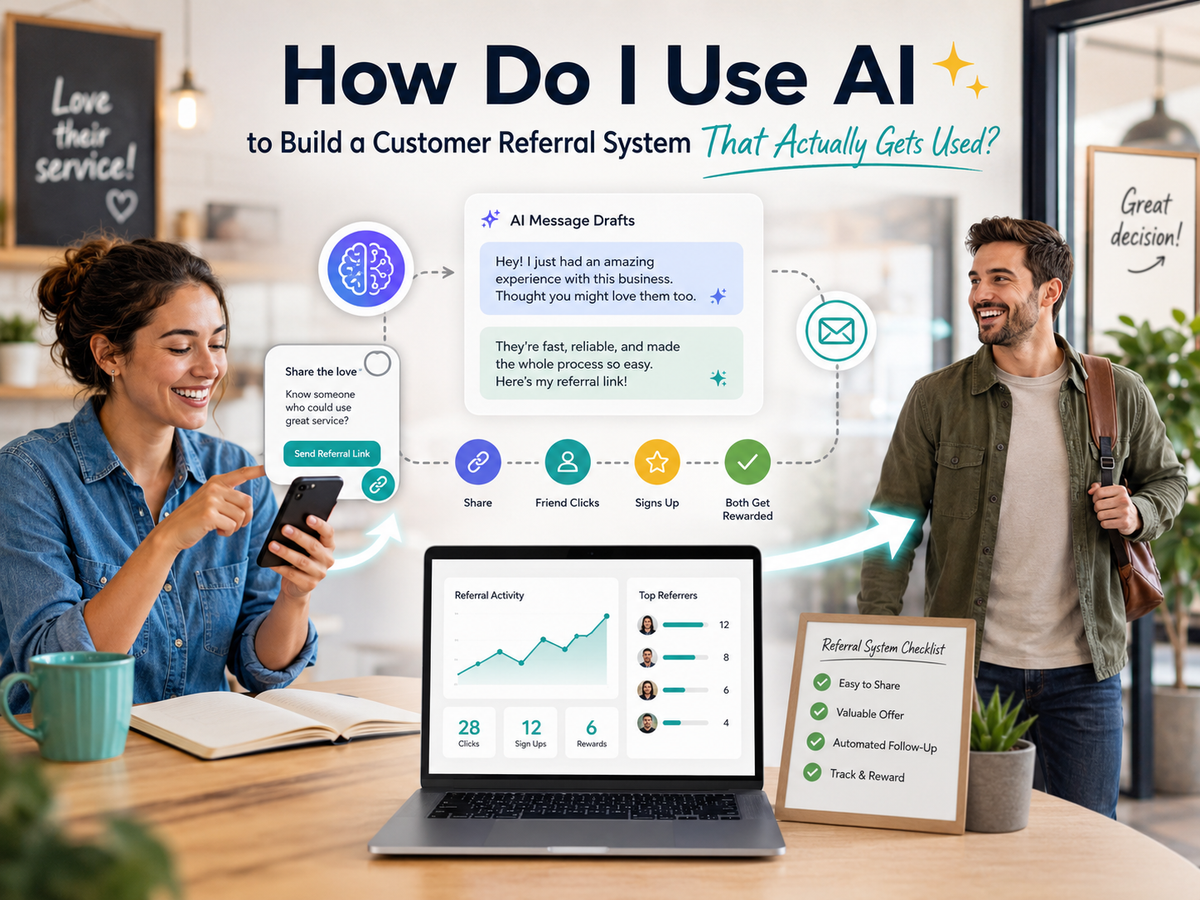
Referrals are the best leads you can get.
They trust you faster. They argue less. They convert easier. They often pay more happily because they came in warm.
So why don’t most small businesses get more referrals?
Because referrals are usually treated like a vibe:
“If people like us, they’ll tell someone.”
That’s partly true… but it’s not a system.
And without a system, referrals happen randomly.
AI helps you fix this by doing the part owners avoid:
- writing the scripts
- making the ask feel natural
- setting triggers so you ask at the right time
- keeping it consistent without being pushy
The tabloid truth
Referrals aren’t luck. They’re a repeatable process you forgot to build.
Let’s build one that works for a small business with a tiny team.
Step 1: Pick one “referral moment” (don’t ask at random)
Most owners ask for referrals at the worst time: when they remember.
Instead, pick a moment when customers are happiest. Common referral moments:
- right after a job is completed and they say “Looks great”
- when they leave a positive review
- after you fix a problem quickly
- after you deliver a report, estimate, or solution they needed
- after they pay the invoice without dispute
Pick one moment, then make it standard.
Example:
“Every time we get a 5-star review, we send the referral message within 24 hours.”
Step 2: Create a one-sentence referral offer (keep it simple)
You don’t need a complicated program.
You need one sentence that explains what to do.
Examples:
- “If you know anyone who needs [service], feel free to text them my number.”
- “If a friend needs help with [problem], I’m happy to give them a quick estimate.”
- “If you know someone who’s dealing with [issue], send them our website and I’ll take care of them.”
If you want incentives, keep them clean and easy:
- gift card
- small credit
- free add-on
But incentives are optional. Clarity is not.
Step 3: Use AI to write 3 scripts (text, email, and in-person)
This is the part most owners skip. So let’s make it easy.
AI Prompt: Referral scripts
“Write 3 referral request messages for a small business in a friendly, non-pushy tone:
- text message (under 240 characters)
- email (short, 6–8 lines)
- in-person script (2 sentences)
Include: gratitude, who we help, and an easy action they can take. Avoid hype and avoid guilt.”
Now you have a consistent ask.
Here are ready-to-use versions:
Script 1: Text (copy/paste)
“Hey [Name], thanks again for choosing us. If you know anyone who needs help with [service], feel free to pass along my info. I’ll take great care of them.”
Script 2: Email (short and clean)
Subject: Quick favor
Hi [Name],
Thanks again for letting us help with [service]. If you know someone who needs [service] in the area, would you feel comfortable forwarding my info?
No pressure at all. Referrals like that help small businesses more than you’d think.
Thanks,
[Your Name]
Script 3: In-person (2 sentences)
“Thanks again, I really appreciate it. If you know anyone else who needs [service], I’d be grateful if you passed my name along.”
No weirdness. No begging. Just clear.
Step 4: Make referrals easy to share (this is where most systems fail)
If customers have to think, they won’t share.
Give them a shareable “package”:
- your Google Business Profile link
- your website contact page link
- a short “what we do” message they can copy
- your phone number
AI Prompt: Referral share blurb
“Write a short shareable blurb (2–3 sentences) a customer can copy to a friend recommending our business. Include what we do, the service area, and a simple call to action. Friendly tone.”
Example share blurb:
“I used [Business Name] for [service] and they were great. They serve [area] and made it really easy. If you need help with [problem], you can reach them at [phone] or [website].”
This is referral fuel.
Step 5: Add a “referral trigger” to your SOP
This is how it becomes real.
Pick ONE trigger and make it automatic:
- After a job closeout email goes out, send the referral text.
- After an invoice is paid, send the referral email.
- After a review is received, send the referral ask.
You can literally add a checkbox to your closeout checklist:
☐ Send referral request
AI doesn’t just write the message. It helps you build the repeatable step.
Step 6: Track referrals with a simple system (no CRM required)
If you don’t track it, you won’t improve it.
Use a simple tracker with:
- Referrer name
- Referred person name
- Date
- Status (contacted/quoted/booked)
- Thank-you sent (yes/no)
This can be:
- a spreadsheet
- a notes app
- a lightweight CRM if you already use one
AI Prompt: Referral tracker template
“Create a simple referral tracking table with columns and short instructions for how to use it weekly. Keep it tiny-team friendly.”
Step 7: Don’t forget the thank-you (this is the loyalty multiplier)
Most businesses ask, then forget to thank.
Thank-you messages make referrals repeat.
Thank-you text (copy/paste)
“Hey [Name], I really appreciate the referral. That means a lot. Thank you.”
Simple. Human. Effective.
The 3 mistakes that make referral systems awkward
1) Asking too early
If you haven’t delivered value yet, the ask feels weird.
2) Making it complicated
Referral cards, forms, codes, portals. Most small businesses don’t need that.
3) Sounding desperate
Don’t guilt people. Don’t beg. Just make it easy.
Final Thought
Referrals aren’t a mystery. They’re a system.
AI helps you create that system fast:
- choose the right referral moment
- write scripts that sound human
- create shareable blurbs
- add a trigger to your SOP
- track and thank consistently
If you want help building an AI-powered referral workflow (scripts, SOP steps, tracking, and a prompt pack your team can use), Managed Nerds can set it up so referrals become predictable, not random.