WhatsApp Is Encrypted… So Why Are Privacy Concerns Growing?
WhatsApp may encrypt messages, but that doesn’t always mean complete privacy. Here’s what small businesses should understand about communication risks.

Many small business owners use WhatsApp every single day.
Customer questions.
Scheduling.
Photos from job sites.
Team coordination.
Quick updates with vendors.
And one of the biggest reasons people trust it is because of one phrase:
“End-to-end encrypted.”
That phrase sounds reassuring. Private. Secure.
But a recent legal dispute involving Meta and WhatsApp is raising new questions about what “private” actually means and whether businesses may be assuming more protection than they really have.
What’s Going On?
Texas is reportedly challenging Meta over claims related to WhatsApp privacy and encryption, arguing that users may have been led to believe their communications were more private than they actually are.
Now, to be clear:
WhatsApp’s end-to-end encryption still protects the contents of messages from being read directly in transit.
That part is important.
But the bigger conversation is about something many people overlook:
Encryption does not automatically equal total privacy.
The Difference Between Encryption and Privacy
This is where things get confusing for many users.
When people hear “encrypted,” they often assume:
- nobody can see anything
- no data is being collected
- communications are completely invisible
That’s not necessarily how modern platforms work.
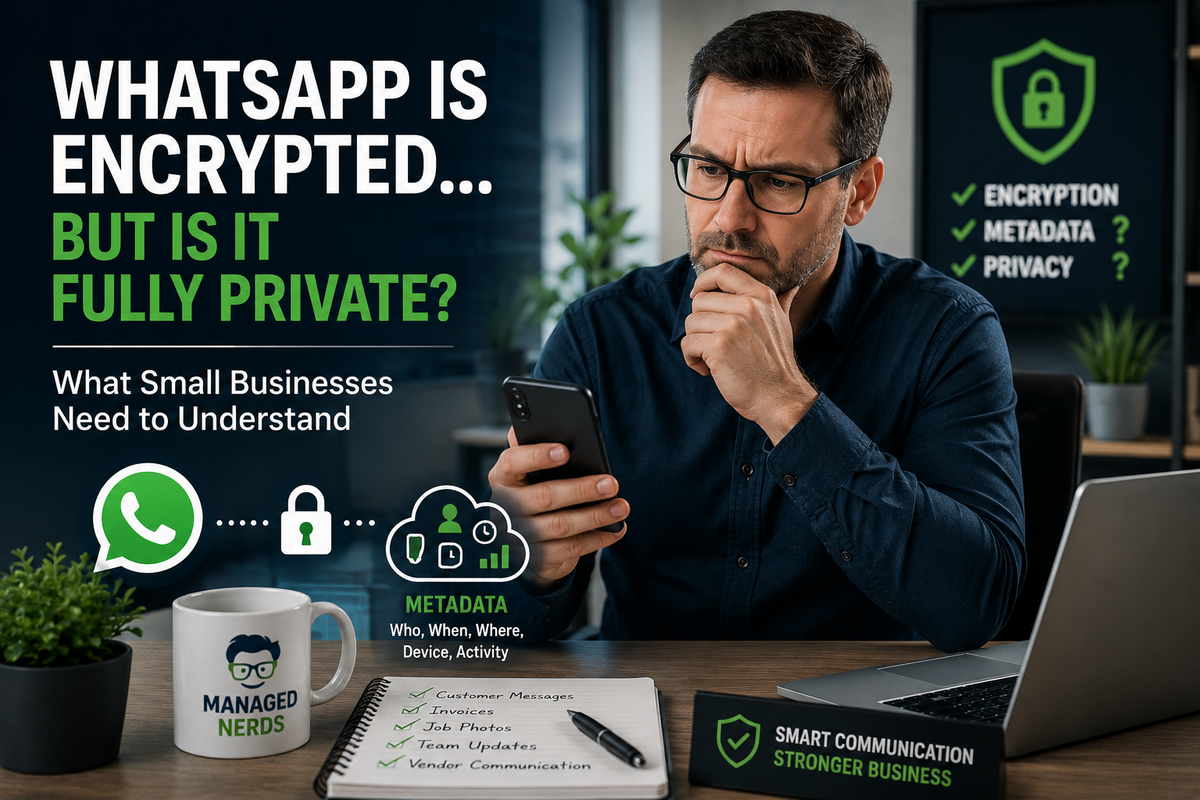
Even when message contents are encrypted, platforms may still potentially collect or process:
- metadata
- device information
- IP addresses
- usage patterns
- contact interactions
- timestamps
- behavioral activity
In simple terms:
Your message itself may be encrypted, but information around the communication can still exist.
Why This Matters for Small Businesses
For casual conversations, many people may not care much about metadata.
But businesses often use messaging platforms for much more than casual chatting.
Small businesses may use WhatsApp to:
- communicate with customers
- send invoices or estimates
- coordinate employees
- discuss schedules
- share files or photos
- manage vendor communication
That means business-related information may still be tied to those interactions.
And many companies never stop to think about:
- what data is being collected
- where it’s stored
- who has access
- what employees are sharing through messaging apps
This Doesn’t Mean WhatsApp Is “Bad”
That’s an important distinction.
WhatsApp still offers strong encryption protections and can absolutely be useful for business communication.
The issue is not:
“WhatsApp is unsafe.”
The issue is:
“Businesses should understand what encryption actually protects… and what it doesn’t.”
That’s a much more realistic and useful conversation.
The Bigger Problem: Assumptions
One of the biggest cybersecurity risks for small businesses isn’t always hackers.
Sometimes it’s assumptions.
Assuming:
- a platform is completely private
- employees know what’s safe to share
- business data isn’t exposed
- communication apps are configured properly
Those assumptions can quietly create risk over time.
What Businesses Should Be Doing
You don’t need to abandon messaging apps.
But businesses should start thinking more intentionally about communication tools.
Train employees on safe communication practices
Employees should understand what information should and shouldn’t be shared through messaging platforms.
Separate personal and business communication
Blending both together increases confusion and exposure.
Understand what platforms actually collect
Privacy policies and data handling matter more than most businesses realize.
Use layered security practices
Encryption is one piece of security, not the entire strategy.
Why Awareness Matters More Than Ever
Modern businesses rely heavily on communication platforms.
And most platforms collect some level of data, even if messages themselves are encrypted.
That’s why cybersecurity today isn’t just about preventing breaches.
It’s also about understanding:
- how tools work
- what data exists
- where risks actually are
How Managed Nerds Helps Businesses Stay Safer
This is where Managed Nerds helps small businesses make smarter technology decisions without creating unnecessary fear or confusion.
Managed Nerds can help businesses:
- Build safer communication practices
- Train employees on cybersecurity awareness
- Review business technology risks
- Improve device and account security
- Help businesses understand how modern platforms actually handle data
- Create layered security strategies instead of relying on assumptions
The goal isn’t to scare businesses away from technology.
It’s to help them use it more intentionally and securely.
Final Thought
Encryption is important.
Privacy matters.
But they are not always the same thing.
The smartest businesses aren’t the ones blindly trusting every platform or panicking over every headline.
They’re the ones taking the time to understand how their tools actually work and putting the right safeguards around them.
Need Help Strengthening Your Business Security Practices?
If your business relies on messaging apps, cloud tools, mobile devices, or remote communication, Managed Nerds can help you build smarter, safer technology habits without overcomplicating things.
Want More Simple Tech Tips Like This?
Subscribe for practical, easy-to-understand technology tips designed specifically for small business owners who want to stay informed, protected, and ahead of modern risks.