Yelp, Foursquare, and Directory SEO: Are Citations Still Worth It in 2026?
Citations are not dead, but the old “submit to 500 directories” strategy is. Here’s how small businesses should clean up listings in 2026.

For years, local SEO advice sounded like this:
“Get listed in as many directories as possible.”
So businesses ended up on dozens, sometimes hundreds, of random directory sites.
Some were useful.
Some were outdated.
Some looked spammy.
Some had the wrong phone number forever.
So now small business owners ask a fair question:
Are citations still worth it in 2026?
The answer is yes, but not the way they used to be.
Citations are no longer about blasting your business into every directory you can find.
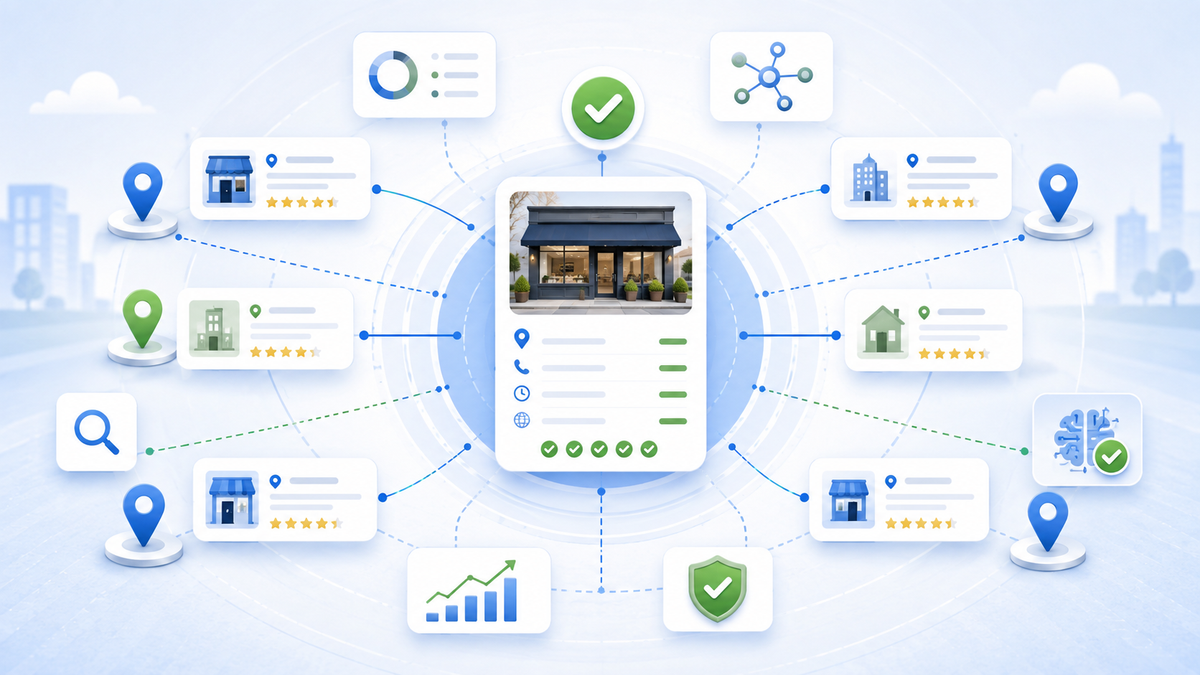
They are about making sure the important places have the correct information, so customers, search engines, maps, and AI tools can verify your business without confusion.
What is a citation?
A citation is any online mention of your business information, usually:
- business name
- address
- phone number
- website
- hours
- category
- service area
This is often called NAP, which stands for:
- Name
- Address
- Phone number
Examples of citation sources include:
- Google Business Profile
- Apple Maps / Apple Business
- Bing Places
- Yelp
- Foursquare data
- Better Business Bureau
- local Chamber of Commerce
- industry directories
- local news or community directories
A citation does not always need to link to your website to matter. The information itself can still help build consistency and trust.
Why citations still matter, but differently now
Old-school citation building was often about quantity.
More directories. More links. More mentions.
That approach is outdated.
Modern citation work is about:
- accuracy
- consistency
- relevance
- trust
- verification
- entity clarity
In plain English:
Can the internet confidently tell that your business is real, active, local, and correctly represented?
That matters because customers often check more than one place before they call.
It also matters because AI search tools and local discovery systems may compare information across sources. Yext’s 2026 guidance says local AI visibility depends on moving from simple listings management to structured data consistency and distribution across the places AI might reference.
The problem with inconsistent listings
Inconsistent listings create confusion.
Example:
Your website says:
Managed Nerds serves Evans, GA and surrounding areas.
Your Google Business Profile says:
Augusta, GA.
Your Yelp listing has:
an old phone number.
Your Bing listing has:
old hours.
Your Facebook page has:
a different website link.
Now a customer has to wonder:
“Is this the same business?”
“Are they still open?”
“Do they serve my area?”
“Which number do I call?”
Most customers will not investigate.
They will move on.
AI search makes consistency even more important
AI search introduces another reason to care about citations.
AI tools may summarize business details from many public sources. If those sources disagree, AI can get the details wrong or choose a competitor with cleaner information.
BrightLocal’s AI/local listings research notes that directories can be important for AI search, with sources like Yelp, Google Business Profile, websites, and data aggregators playing roles in how business information is surfaced.
A recent Business Insider report also highlighted cases where Google AI Overviews pulled confusing or incorrect business details from multiple places, including websites, older content, and Yelp reviews.
That is the risk.
If your business data is messy, AI has more room to misunderstand you.
Useful citations vs. directory spam
Not all citations are equal.
Useful citations
Useful citations are listings that:
- customers actually use
- search engines recognize
- map platforms reference
- AI tools may use for verification
- are relevant to your industry or location
- include accurate business information
Examples:
- Google Business Profile
- Apple Maps
- Bing Places
- Yelp
- BBB, if relevant
- local Chamber of Commerce
- industry directories like Avvo, Houzz, Angi, TripAdvisor, Zocdoc, or similar, depending on your field
Directory spam
Directory spam includes:
- low-quality sites nobody uses
- irrelevant directories
- duplicate listings
- auto-generated listings with wrong info
- paid directories with no real audience
- directories created mostly for SEO links
The goal is not to be everywhere.
The goal is to be correct where it matters.
The must-check listing stack
If you are a small local business, start with this stack.
1) Google Business Profile
This is usually the top priority.
Check:
- business name
- category
- hours
- phone
- website
- services
- service area
- photos
- reviews
2) Apple Maps / Apple Business
Important for iPhone users, Siri, Apple Maps, and CarPlay behavior.
Check:
- hours
- address or service area
- phone
- website
- photos
- actions, if available
3) Bing Places
Important for Bing Search, Bing Maps, Microsoft Edge, Windows search surfaces, and Microsoft-connected discovery.
Check:
- category
- hours
- address/service area
- services
- photos
- phone
- website
4) Yelp
Yelp still matters in many local categories and can show up in search, maps, and AI-adjacent discovery.
Check:
- business name
- address
- phone
- website
- category
- hours
- service details
- photos
5) Facebook
Many customers still use Facebook as a business verification layer.
Check:
- page name
- phone
- website
- hours
- service area
- recent activity
- messaging settings
6) Data aggregators
Data aggregators distribute business information to many downstream sources.
BrightLocal explains that data aggregators submit business data to a wide range of listings sites and apps at once, and specifically notes Foursquare Places as a key data aggregator after its merger with Factual.
This matters because wrong aggregator data can keep spreading old information.
7) Industry-specific directories
These depend on your business type.
Examples:
- attorneys: Avvo, Justia
- home services: Angi, Houzz
- hospitality: TripAdvisor
- medical: Healthgrades, Zocdoc
- real estate: Zillow, Realtor.com
- local businesses: Chamber of Commerce directories
Pick the ones customers actually use.
How to audit citations without going crazy
You do not need to fix the whole internet in one day.
Use this simple process.
Step 1: Create your “source of truth”
Write down the correct version of:
- business name
- address or service area
- phone number
- website
- hours
- category
- short business description
- key services
- social links
This becomes your reference sheet.
Step 2: Check your top listings
Start with:
- Apple
- Bing
- Yelp
- website contact page
Compare each one against your source of truth.
Step 3: Fix the biggest errors first
Prioritize:
- wrong phone number
- wrong address
- wrong hours
- wrong website
- duplicate listings
- business marked closed
- wrong category
Those errors can directly cost you leads.
Step 4: Check industry and local directories
Look for the listings customers might actually use.
A local Chamber listing may matter more than a random national directory nobody visits.
Step 5: Recheck quarterly
Listings drift over time.
Old addresses, old agencies, old tools, and auto-generated profiles can create new inconsistencies.
Set a quarterly reminder.
The quarterly citation audit checklist
Use this every three months:
- Is the business name consistent?
- Is the phone number correct?
- Is the address or service area correct?
- Are hours current?
- Is the website link correct?
- Are categories accurate?
- Are services current?
- Are photos recent?
- Are duplicate listings active?
- Do Google, Apple, Bing, Yelp, Facebook, and your website match?
- Are industry directories still accurate?
This is not exciting work.
But it prevents invisible lead leaks.
How citations support SEO content
Citations are not just listings.
They can help your content strategy too.
If people on Yelp or directories describe your service in a certain way, that language may reveal what customers care about.
If your Chamber listing gets visits, maybe local trust is a stronger angle.
If industry directories include categories you forgot to mention on your website, you may need clearer service pages.
Your listings should support your website, and your website should support your listings.
Everything should tell the same story.
What not to do
Avoid:
- buying hundreds of low-quality directory submissions
- keyword-stuffing business names
- using tracking numbers inconsistently
- ignoring old addresses
- leaving duplicates online
- listing services you do not offer
- using outdated photos
- assuming Google is the only listing that matters
Directory SEO is not about looking bigger.
It is about being accurate, trustworthy, and easy to verify.
The bottom line
Citations are still worth it in 2026, but the strategy has changed.
Do not chase 500 random directories.
Focus on the places that matter:
- Apple
- Bing
- Yelp
- data aggregators
- local and industry directories
Make the information consistent. Fix major errors. Recheck quarterly.
Need help cleaning up your listings so customers, search engines, and AI tools see the right information? Managed Nerds offers practical small business SEO and marketing support to align your Google, Apple, Bing, directory, and website signals so your business looks trustworthy wherever customers search.
Thank you for reading. If you’d like more small business SEO tips, subscribe for updates.